

Digital Marketing Lessons From DigitalConnectMag.Com and Other Tech Sites
DigitalConnectMag.com looks like a tech magazine on the surface: articles about gadgets, crypto, AI, and business. But if you read it the way a digital marketer reads the web, it doubles as a live classroom for digital marketing. Every headline, image, page layout and internal link shows how a modern tech site thinks about content, media, traffic and sales.
Put that next to other well-known tech and marketing blogs from places like HubSpot, Constant Contact, and different digital marketing agency sites, and a clear picture appears. These sites are not just publishing words. They are running careful marketing experiments across digital channels: search, email, social media platforms, video, and online marketing partnerships such as affiliate marketing.
Below are practical lessons you can copy from DigitalConnectMag.com and similar platforms if you run a small business, a store, an online service, or you just want to understand how digital marketing strategies actually play out in the wild.
How Tech Sites Treat Content As A Product
On DigitalConnectMag.com, the main products are articles, guides and reviews. For a tech site, content marketing is not a side project; it is the main service. That mindset is worth copying.
Every article targets a clear audience. A piece about AI tools for businesses speaks to owners and marketers. A breakdown of crypto platforms speaks to people who trade. A feature on gadgets speaks to readers who might later click through to partner companies and buy. The brand sees each article as a unit of value that can bring in traffic, build brand awareness, and move customers a little closer to products or partner offers.
Look at how they mix content types: long blog posts, short updates, lists, explainers. The variety keeps potential customers on the site longer. Some pages lean toward search engine optimization and search engines; others lean toward social media reach or email engagement. Over time this mix shows digital marketers what their target audience cares about without needing a constant stream of surveys.
If you run your own business, think the same way. Whatever you sell, your articles, videos and posts are part of your product line. They educate, filter, and warm up customers before any ads or sales call.
Lesson 1: Start With Audience And Topics Before Channels
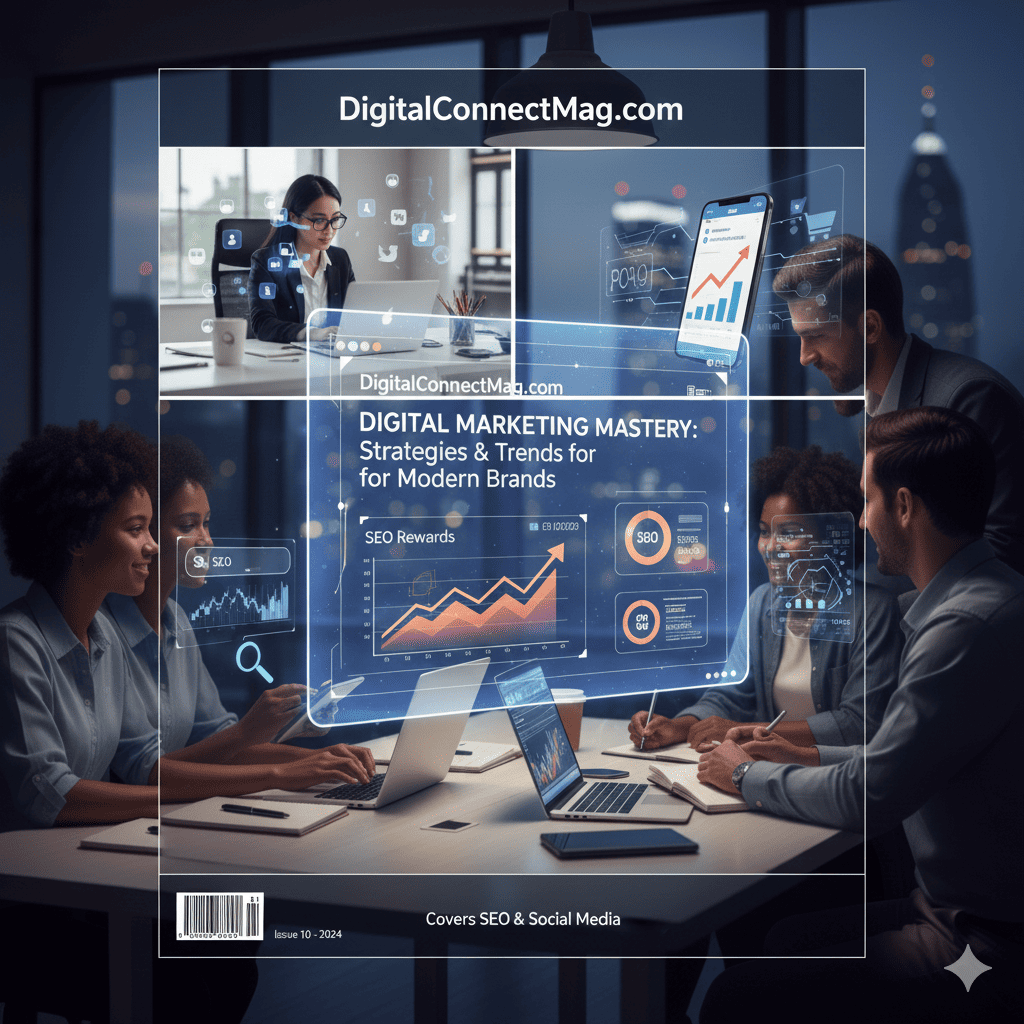
Sites like DigitalConnectMag.com, HubSpot, and other tech blogs write as if they are talking to a specific person, not a vague “user.” You can feel it in their language, examples and media choices.
They do not start by saying, “We must post on every social media app this week.” They start with questions like:
- Who is this page for? A startup founder, a student, a small business owner?
- What problem does this person have today?
- What content or simple strategy will help that person move one step forward?
Once they know that, they decide where to put the content: on the blog for search results, in social media marketing posts, inside email marketing tools like Constant Contact, or in a video on a social media channel.
The order is important. Many companies and businesses jump straight to digital marketing channels (“we need TikTok”, “we need google ads”) and only later think about the message. The better route is message first, channels second.
Pro tip: Write one strong piece for your target audience, then adapt it for multiple channels. Turn the long article into shorter blog posts for search engines, a thread for social media platforms, and a short video outline. One core idea can fuel a whole digital marketing campaign.
Lesson 2: Search Engines Still Drive Serious Business
Tech sites treat SEO as a daily habit, not a special project. Titles match real search phrases. Subheadings answer common questions. Internal links tie related content together so search engines can see the site as a clear library, not a random dump of posts.
DigitalConnectMag.com and other tech sites care a lot about search engine results because the intent behind those clicks is strong. Someone who finds you through google or another engine has already typed in a problem. That visitor often has higher conversion rate potential than a random scroller on social media.
You can spot search engine optimization at work when you see:
- articles built around direct questions
- pages that match search results snippets very closely
- clean URLs, clear headings, and useful answer sections
Digital marketers in agencies and in-house teams follow the same pattern. They treat search engines as a long-term traffic source that keeps working while they sleep. PPC tools like google ads and search engine marketing bring faster results, but the organic side compounds over time.
If you run a business, put steady effort into SEO-friendly content before you obsess about the next campaign. Over a year, this slow build can bring in more customers than a single paid campaign that runs for a week.
Lesson 3: Social Media Is A Proof Machine, Not Just A Megaphone
DigitalConnectMag.com and similar sites use social media and social media marketing in a focused way. Their social media platforms show clips from articles, standout quotes, simple video teasers and sometimes behind-the-scenes media about the brand.
The goal is not only reach. It is proof. New visitors see that the site posts often, replies to comments, and shares useful content. That builds trust. The main work of turning audience into customers still happens through the site itself, landing pages, email, and other services.
For your own online marketing strategy, treat social media as:
- a way to show that your business is alive
- a place to point people toward deeper content
- a casual space where people can ask simple questions
This mirrors what digital marketing agency teams do for clients. They focus the heavy selling on sites and landing pages, and use social media marketing to support the story.
Lesson 4: Data, Analytics And Simple Metrics
Behind every tech site sits a quiet layer of analytics. Editors and marketers check which pages bring traffic, which channels send high-quality visitors, and which campaigns nudge people toward sign-ups or other goals.
They look at data points such as:
- which digital marketing channels send people who stay longer
- how campaign changes affect sales and email sign-ups
- how different types of content perform on different platforms
Job pages on tech and marketing sites sometimes even share salary data and average base salaries for digital marketers, SEO specialists or social media managers. That same mindset applies internally: teams track performance of campaigns just like they track pay bands.
You do not need a complex analytics stack to copy this thinking. Start with simple checks:
- Which articles bring the most traffic from search engines?
- Which social media posts send visitors who actually look around?
- Which pages turn visitors into subscribers, leads or buyers?
Once you know that, your marketing strategy becomes clearer. You stop guessing and build future digital marketing campaigns around formats and topics that already earn attention.
Lesson 5: Multiple Channels, One Story
DigitalConnectMag.com, HubSpot, and other tech sites rarely rely on a single path. They use multiple channels together:
- content marketing on the site
- email newsletters and tools such as Constant Contact or similar services
- social media activity
- search engine marketing and PPC ads
- affiliate marketing and partner links
- sometimes video series or podcasts
Each piece points to the same story. DigitalConnectMag.com presents itself as a tech and business information hub. That message shows up in blog posts, in snippets on social media, in search snippets, and in internet marketing partnerships.
For a small business, the mix will be smaller, yet the idea holds. If you run an online store, a service, or a digital marketing agency, it helps to decide on a clear story and repeat it everywhere. That could be “simple tech help for local shops”, “fitness training for busy parents”, or “digital marketing help for small business everything in one place.”
Once you know the story, each campaign, online marketing move, and marketing strategy choice becomes easier. You are not chasing every new media trend; you are picking digital marketing channels that fit your brand, your audience, and your limited time.
Lesson 6: Lessons For Careers In Digital Marketing
Tech sites do not just teach marketing through their content. They also show what digital marketing careers look like. Job boards, salary data reports, and “day in the life” posts talk about what a digital marketer does, which types of campaigns they manage, and how average base salaries change with skills such as SEO, PPC, video production or analytics.
For many people considering this field, sites like DigitalConnectMag.com are research tools. They read blog posts on digital marketing strategies, see how companies measure performance with traffic, leads, and sales, and test small campaigns of their own. Over time, they learn how online marketing differs from traditional marketing, why search engines matter, how conversion rate works, and where digital marketing agency work fits into the wider business world.
If you want to move into this space, treat these sites as both textbook and lab. Study the strategies they use, then test a small digital marketing campaign for your own blog, shop or side project.
FAQs
1. What digital marketing lesson stands out most from DigitalConnectMag.com?
Topic and audience come first. Every article feels written for a clear target audience, then shared across digital channels that fit that topic.
2. How do tech sites balance SEO and social media?
They use SEO and search engine optimization to bring steady traffic from search engines, while social media marketing and video posts keep the brand active and visible day to day.
3. Can small businesses copy the same strategies?
Yes. Even with limited time, a small business can publish relevant content, pick one or two digital marketing channels, and run simple campaigns that speak to real customers.
4. Where do tools like HubSpot and Constant Contact fit in?
Sites like HubSpot share long-form guides on digital marketing, while tools such as Constant Contact help with email and online marketing strategy. Tech sites often use both style and tools as part of one marketing strategy.
5. How important is data in digital marketing today?
Data and analytics guide almost every digital marketing strategy decision, from google ads spending to which blog posts to write next. The more you understand your traffic and customer behaviour, the easier it is to choose the right campaigns and channels.


